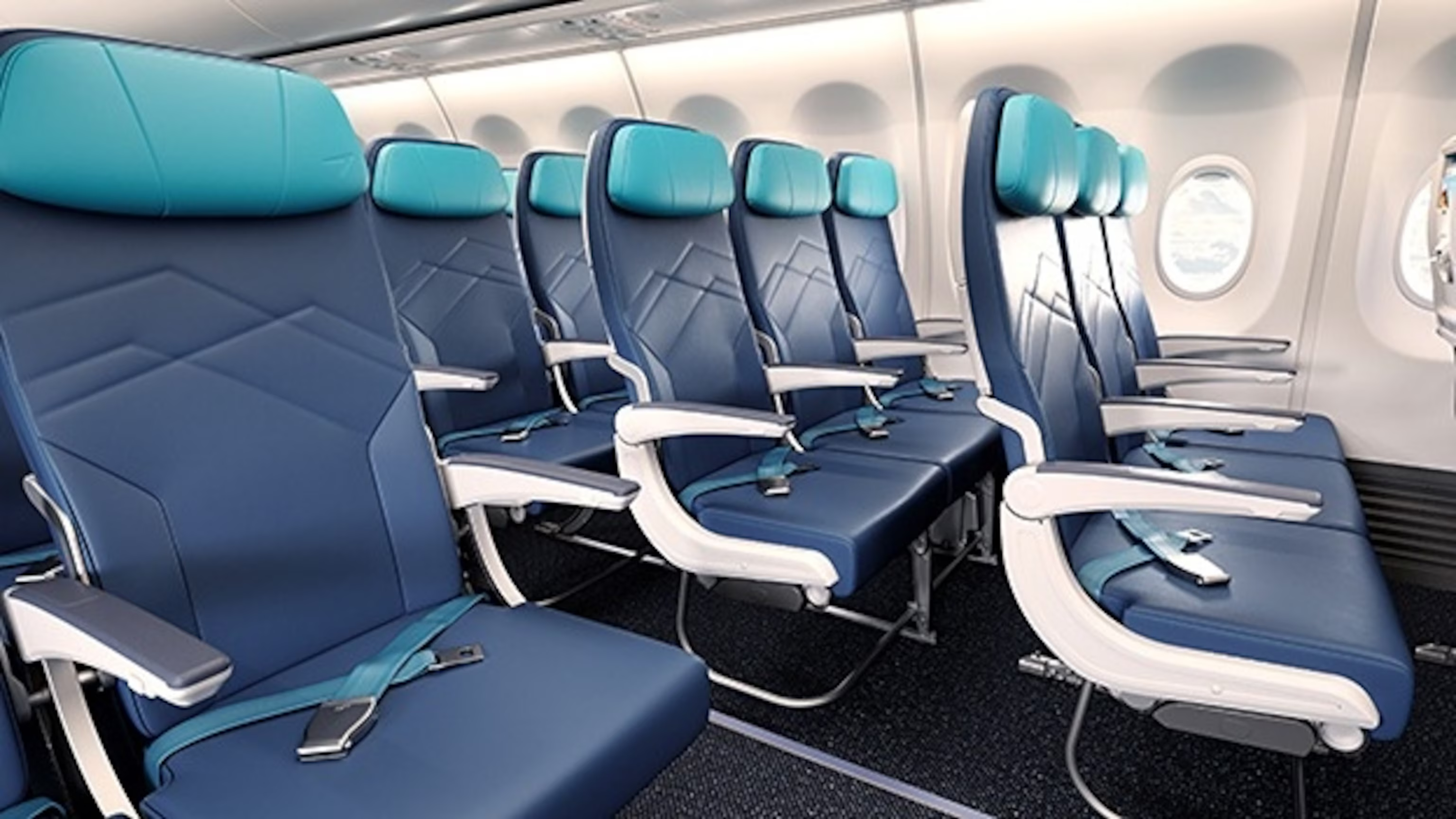
WestJet has been reconfiguring a portion of its Boeing 737 fleet to create more “choice” inside the cabin: a Premium cabin at the front, a larger Extended Comfort section, and a Standard economy section with varying space depending on where you sit. The change has attracted a lot of attention because some standard economy rows in the reconfigured layout go down to 28 inches of pitch and use a fixed recline design (meaning you can’t manually recline your seat).
If you care about legroom, recline, or just want to avoid surprises, the most important skill is learning how to identify the reconfigured aircraft before you pay.
This guide covers:
- what the new layout actually is
- how to tell if your specific flight will have it
- practical ways to avoid it (or at least reduce the pain)
- realistic “chances” of seeing it by route type
What WestJet changed
WestJet describes this as part of a broader cabin refresh for “formerly economy-only aircraft,” adding Premium seating and expanding Extended Comfort options.
In the reconfigured Boeing 737 layout (you’ll usually see it referenced as a specific “layout” on WestJet’s aircraft pages), Standard economy is now split by space level:
- Toward the front of economy: rows 10–12 (most space within standard)
- Mid-economy: rows 15–19 (a bit more space than the back)
- Back of economy: rows 20–31 (least space in standard)
On WestJet’s own seat specs for the reconfigured layout, rows 20–31 are listed at 28 inches of pitch, and standard economy uses a fixed recline of 1.5 cm (pre-set angle; no manual recline).
Extended Comfort remains the “pay more for better” option in economy (extra legroom, front-of-economy location, and adjustable recline on the reconfigured aircraft).
Premium is a separate cabin at the front with the most space and adjustable recline.
How to know if your flight will be on the reconfigured layout
Aircraft swaps can happen right up until departure, but you can still get a strong read before booking. The goal is to identify whether your flight is scheduled on a Boeing 737 using the reconfigured “layout” that includes fixed-recline standard economy and the 31-row economy section.
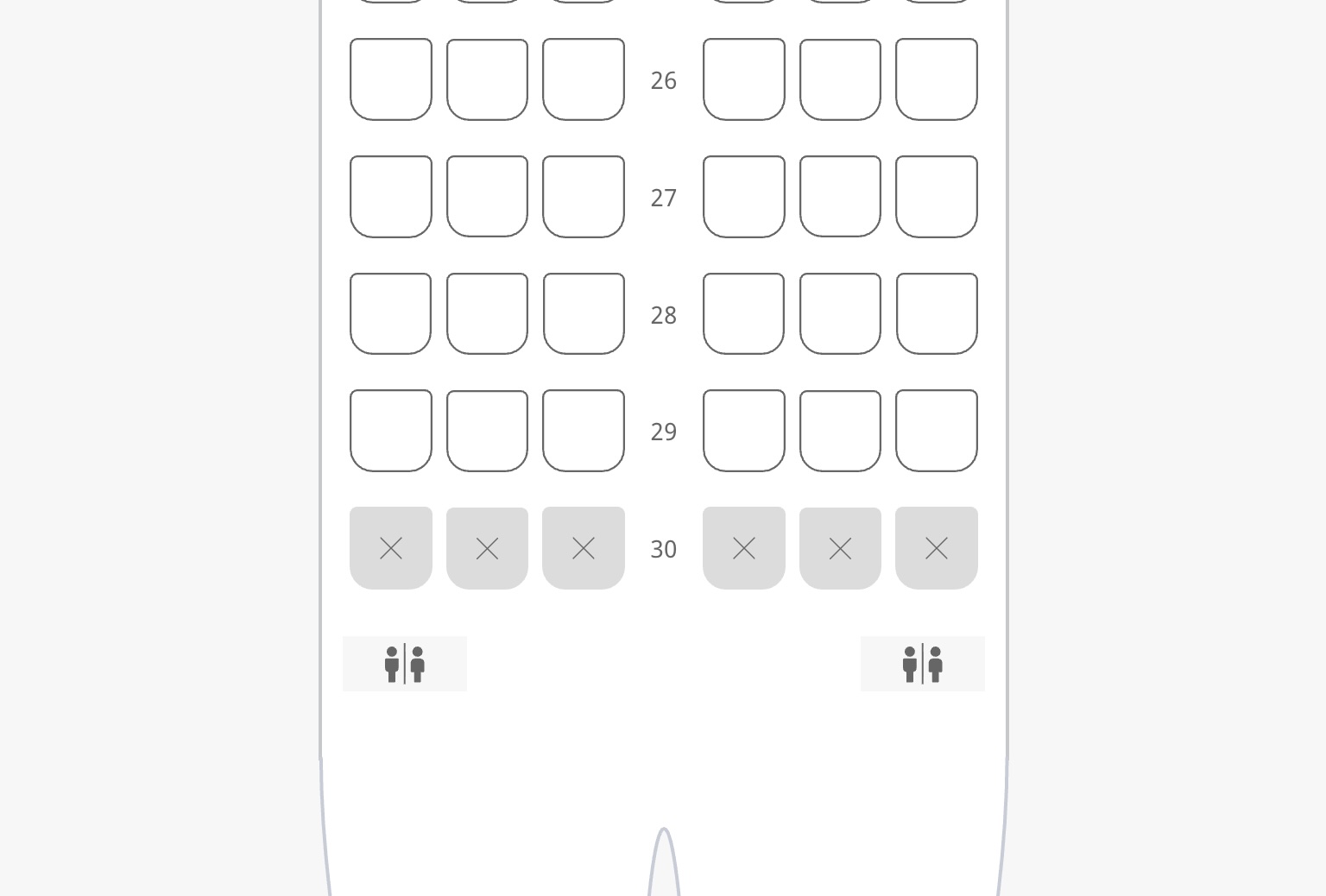
Step 1: Check the seat map before you buy
On WestJet’s booking flow (or in Manage Trips after booking), go into seat selection and look for these tells:
- Standard economy goes back to row 31
- You see a clearly labeled Premium cabin at the front (typically rows 1–3)
- You see an Extended Comfort section grouped near the front of economy (commonly rows 4–9 on the reconfigured 737 layout)
- The standard economy section is visually “tiered” by row range (front/middle/back)
If you’re seeing row numbers only up to 30 (or you’re not seeing the Premium/Extended Comfort structure in that way), you may be on a different layout. The fastest “gut check” is simply whether standard economy runs through row 31 and the cabin is presented as Premium + Extended Comfort + Standard with those row ranges.
Step 2: Confirm the aircraft type, then confirm the layout
WestJet operates multiple variants and multiple cabin layouts within the same aircraft type. For example, WestJet’s Boeing 737-8 MAX page shows multiple layouts and notes that some aircraft have pre-reclined seats (fixed in place with no manual recline).
So:
- First, confirm your flight is on a 737-800 or 737-8 MAX (common on domestic, transborder, and sun routes).
- Second, confirm which layout your seat map resembles (the reconfigured one will match the row-range behavior described above).
Step 3: Re-check closer to departure
Because equipment swaps happen, do one more seat-map check:
- 7 days out
- 24–48 hours out (when many people are picking seats/checking in)
If the seat map suddenly changes (rows, cabin sections, exit row positions), your aircraft assignment likely changed too.
How to avoid these seats entirely
If your goal is “no reconfigured layout at all,” your best lever is picking flights that are unlikely to be operated by the retrofitted 737 subfleet.
Strategy A: Choose routes and aircraft types that can’t have the new layout
These are essentially “zero risk” for the controversial 737 standard-economy fixed-recline setup:
- Boeing 787-9 Dreamliner flights (long-haul widebody)
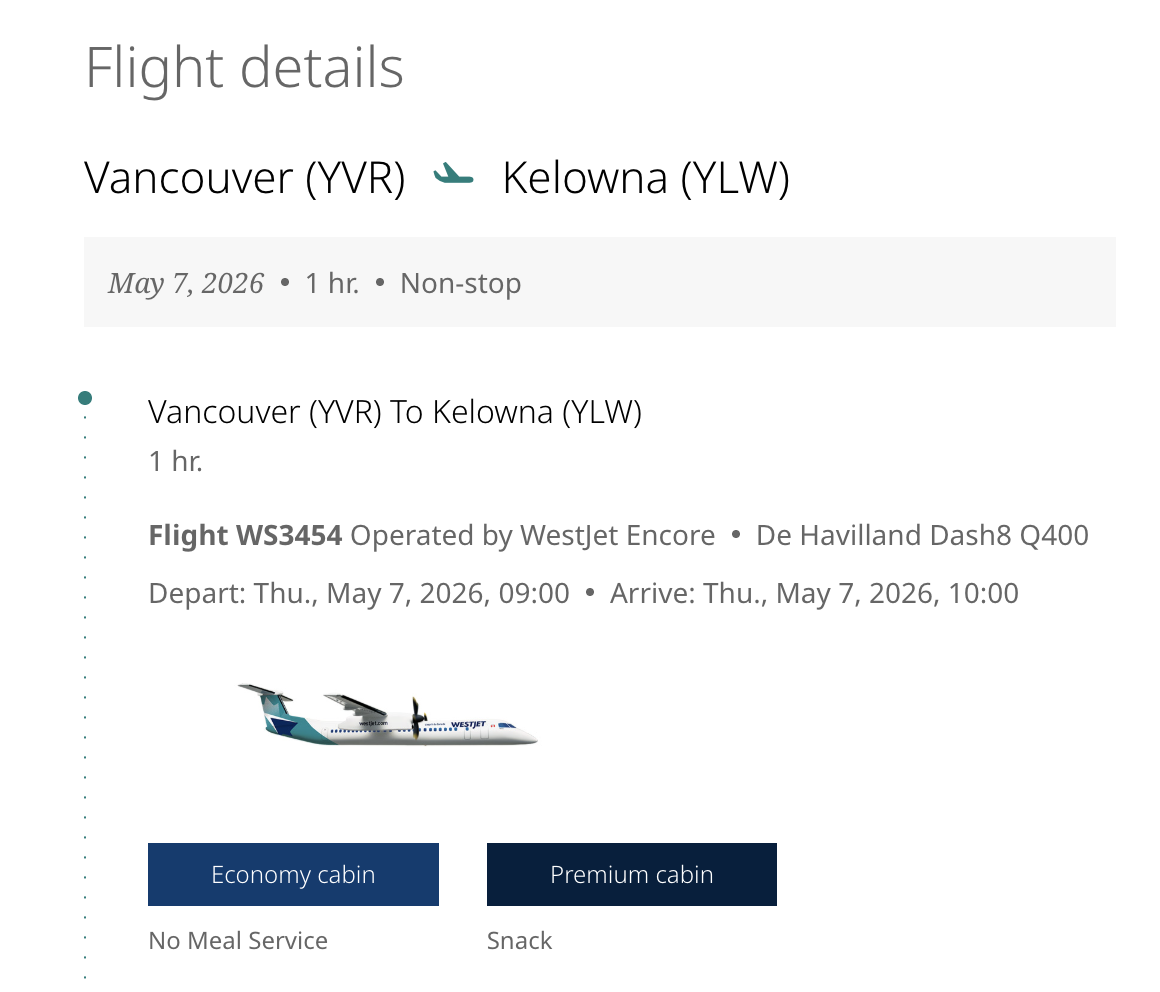
- WestJet Encore Q400 flights (regional turboprop)
If the booking page clearly shows 787-9 or Q400, you can stop worrying about the 737 reconfiguration.
Strategy B: Prefer the 737-700 where possible
WestJet’s fleet includes Boeing 737-700 aircraft as well.
The “new seat squeeze” story is specifically tied to the reconfiguration of a set of Boeing 737 jets that were previously configured as economy-only aircraft.
Not every route offers a 737-700 option, but when it does, it can be a practical way to reduce the odds you’re placed on the reconfigured 737 layout.
Strategy C: Pick flights where the seat map doesn’t match the reconfigured layout
When comparing two flights on the same route:
- Open seat selection for both
- Choose the one whose seat map does not run standard economy through row 31 with the Premium + Extended Comfort structure described earlier
This is the single most reliable “before you book” method because it’s based on the actual seat map you’ll be assigned.
If you can’t avoid the reconfigured layout, how to minimize the downside
Sometimes the schedule, price, or timing wins. If you’re stuck with the reconfigured aircraft, you can still make smarter seat decisions.
Best options inside the reconfigured plane
- Extended Comfort seats (more legroom, front of economy, adjustable recline on the reconfigured aircraft)
- Exit rows (typically the biggest legroom jump on narrowbodies)
- Front-of-economy standard rows (rows 10–12 are listed as offering more space within standard in the new configuration)
Seats and zones to avoid
- Back-of-cabin standard rows 20–31 if you care about legroom (WestJet lists these as the controversial least-space portion of standard, and seat specs show 28-inch pitch in that zone on the reconfigured layout)
- The last few rows if you care about seat width (WestJet’s seat specs note narrower seats in the final rows on some layouts due to aircraft curvature)
- Any row where the seat map indicates no recline (even outside the new fixed-recline concept, some specific rows can be limited)
A practical comfort tip for fixed-recline standard seats
Fixed-recline isn’t the same as “completely upright,” but it does remove your ability to change posture. If you’re tall or prone to back stiffness, prioritize legroom first (Extended Comfort or exit row). Legroom usually matters more than recline when you’re trying to stay comfortable on a narrowbody.
What are the chances your flight gets the new configuration?
WestJet announced 43 aircraft planned for the new cabin experience, with the first entering service in October 2025.
As of January 2026 reporting, 21 planes had the compressed configuration in service.
WestJet also paused parts of the rollout to gather feedback, according to reporting in December 2025.
The tricky part is that planes aren’t assigned randomly. The best you can do is think in route categories and fleet realities.
WestJet’s narrowbody fleet is heavily 737-based (with large counts of 737-8 MAX and 737-800 NG).
The reconfiguration program is tied to a subset of Boeing 737 aircraft that were formerly economy-only (commonly associated with aircraft integrated from other operations).
With that in mind, here are realistic odds ranges you can use as a planning tool.
Category 1: Long-haul widebody routes (787-9)
Chance of the reconfigured 737 layout: essentially 0%
If the route is operated by the 787-9 Dreamliner, you’re not dealing with this 737 seat map story.
Category 2: Regional routes (Q400)
Chance of the reconfigured 737 layout: essentially 0%
Encore’s Q400 network is separate equipment.
Category 3: Core domestic routes on 737 (major city pairs)
Chance: moderate and rising (roughly 10%–25% as of mid-January 2026)
These routes have frequent frequency and use a lot of 737 lift. Because 21 reconfigured aircraft were reported in service out of a large 737 operation, your overall odds on a random 737 flight are not “most flights,” but they are no longer rare either.
Category 4: Transborder (U.S.) and “sun” leisure flying on 737
Chance: often higher than core domestic (roughly 20%–40% as a planning range)
WestJet explicitly positions the 737 MAX as central for domestic, transborder, and sun capacity, and the reconfigured aircraft program is targeted at formerly economy-only narrowbodies that are commonly deployed on leisure flying.
Because leisure routes are where airlines most aggressively optimize seat economics, this is the category where you should be most proactive about checking the seat map before paying.
Category 5: Smaller-city routes that sometimes use 737-700 instead of 737-800/MAX
Chance: low to moderate (roughly 5%–15%)
If a route is frequently served by 737-700 equipment, your odds of encountering the reconfigured layout can be lower than on routes that are dominated by 737-800/MAX rotations.
A quick “before you book” checklist
Use this every time you’re comparing WestJet flights:
- Open seat selection before checkout
- Look for standard economy extending to row 31 and the Premium + Extended Comfort structure
- If you see the reconfigured pattern, decide:
- avoid the flight entirely, or
- buy Extended Comfort / exit row / front-of-economy standard seats
- Re-check the seat map again 24–48 hours before departure in case of aircraft swaps
Bottom line
WestJet’s reconfigured Boeing 737 cabins are now common enough that you should assume they are possible on any 737-800 or 737-8 MAX route unless the seat map proves otherwise. The good news is that WestJet’s own seat maps and row ranges give you a reliable way to spot the configuration before you commit, and you can usually reduce the downside by choosing Extended Comfort, exit rows, or the forward standard rows.
If you’re booking a leisure-heavy route (especially transborder or sun flying), treat “check the seat map” as mandatory, not optional.